Marco DeSantis was standing outside Terminal 1 at JFK in a navy suit, holding a sign with one name on it. The car behind him was a black Suburban, engine off, parked in the arrivals pickup lane. Marco had been there for twelve minutes already because the flight landed early.
Twenty feet away, Priya Nair was staring at her phone. She had requested an Uber Black fourteen minutes ago. The app showed her driver circling the airport access road for the third time because Terminal 1 pickup regulations had changed and the driver did not know the new staging area. She had already been charged a $3.50 airport surcharge. Her fare was climbing.
Both of these are called black car service. Both involve a dark sedan or SUV. Both cost more than a standard rideshare. But what each one actually delivers at JFK is so different that calling them the same thing is where the confusion starts.
This is the full comparison. What you get. What you pay. What happens when things go wrong. And which one makes sense depending on why you are at the airport in the first place.
What “Black Car” Actually Means in New York
In New York City, a black car is not a color. It is a legal classification.
The NYC Taxi and Limousine Commission licenses three categories of for-hire vehicle bases: black car bases, luxury limousine bases, and livery bases. A black car base is a TLC-licensed operation that dispatches all trips on a pre-arranged basis, with at least 90 percent of its business conducted through non-cash payment. That definition comes directly from the TLC.
Black car bases must affiliate a minimum of ten vehicles, or five vehicles if one of the five is wheelchair accessible. Every vehicle goes through TLC safety inspections. Every driver holds an active TLC license, which requires completing a 24-hour driver education course, a six-hour defensive driving course, a medical exam, a drug test, and a background check through IdentoGo fingerprinting. Drivers must be at least 19 years old and hold a valid chauffeur license.
When you book a traditional black car service in New York, you are booking from one of these licensed bases. Your trip is dispatched, tracked, and insured through that base.
What Uber Black Actually Is
Uber Black is a product tier inside the Uber app. It is not a car service in the traditional New York sense. It is a matching algorithm that connects your ride request to independent contractor drivers who meet certain vehicle and rating requirements.
To qualify for Uber Black, the vehicle must have a black exterior, black leather or vegan leather interior, and a model year no older than five years. The driver must maintain a 4.85 or higher rating on their most recent 500 trips. In New York City, the driver must also hold a TLC license, which is required for all app-based for-hire vehicle drivers, not just Uber Black.
The critical distinction is the relationship. A traditional black car driver works for the car service company. An Uber Black driver is an independent contractor running their own business through the app. The company dispatches the driver. The app matches you to whoever is closest.
That distinction determines almost everything about the experience.
Pricing: Flat Rate vs. Live Quote
A traditional black car service quotes you a flat rate when you book. For a sedan from JFK to Midtown Manhattan, that rate typically runs $80 to $140 depending on the service and vehicle type. The price is locked. It does not change because of traffic, weather, time of day, or demand. What you see when you book is what you pay when you arrive.
Uber Black works on dynamic pricing. A base fare from JFK to Midtown Manhattan runs roughly $85 to $120. But that is the base. According to data published by Blade, 34 percent of Manhattan-bound rides from JFK experience surge pricing, with multipliers averaging 1.5 to 2.5 times the base rate during peak periods. Friday evenings between 4 and 8 p.m. and Sunday evenings between 5 and 9 p.m. are the worst windows.
That means an Uber Black ride that quotes $95 at 2 p.m. on a Tuesday might quote $190 or more at 6 p.m. on a Friday. The same route. The same distance. The same traffic. Just more people opening the app at the same time.
On top of the fare, Uber adds a JFK airport per-pickup surcharge of $3.50 as of March 2026, rising to $4.50 in March 2027 and $5.00 in March 2028. Tolls through the Queens-Midtown Tunnel run approximately $9.50. The congestion pricing surcharge adds another $9 for most rides entering Manhattan. Tips are additional.
A pre-booked car service includes tolls and surcharges in the flat rate. No line items. No surprises at the end of the trip.
The Airport Pickup Experience
This is where the two products diverge the most.
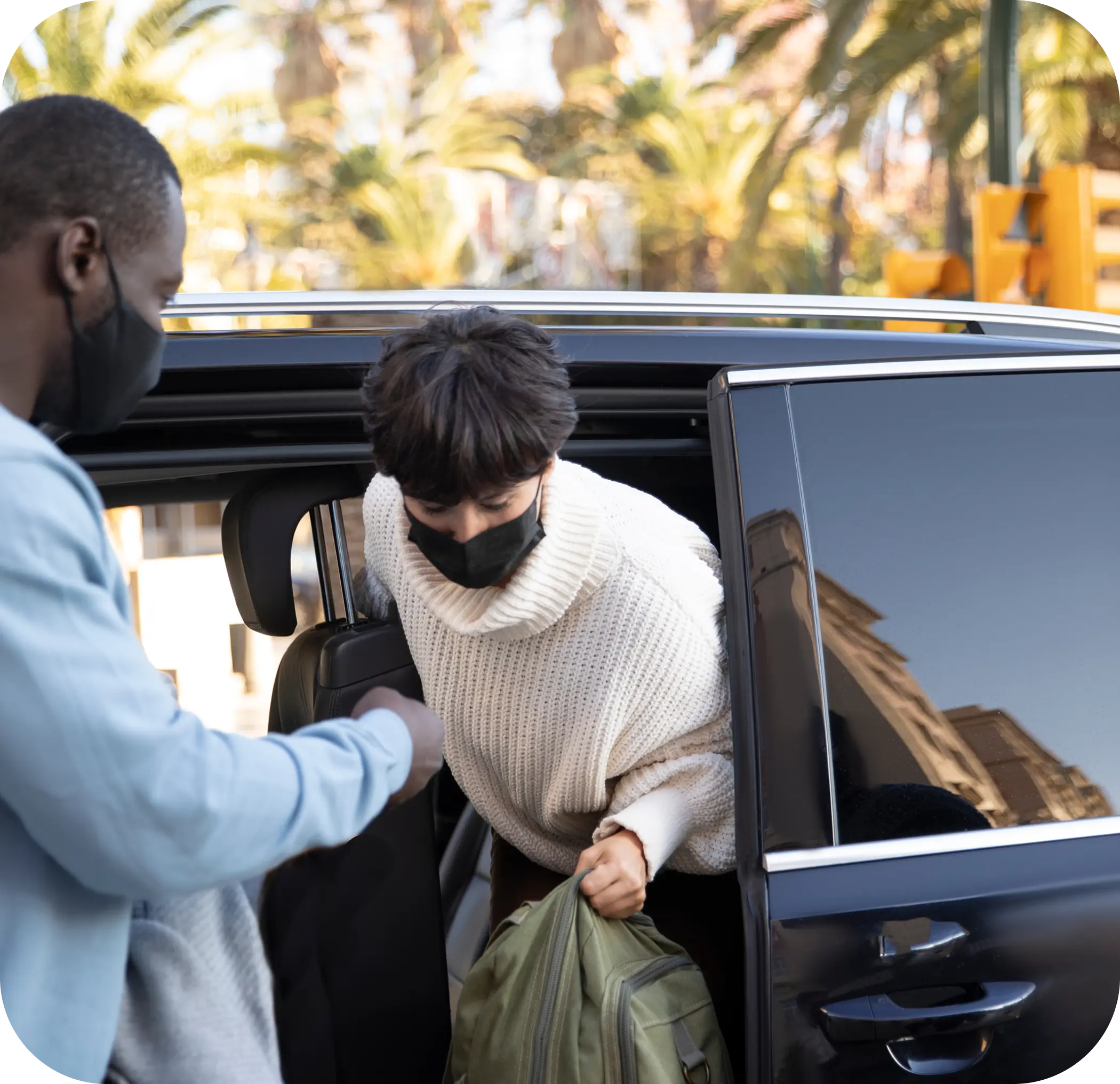
With a pre-booked car service from JFK, your driver monitors your flight in real time. If your plane is delayed, the driver adjusts. When you walk out of the terminal, the car is already positioned in the arrivals pickup area. Your driver meets you, loads your luggage, and you leave. If your flight lands early, the driver is already there. If customs takes an extra thirty minutes, the driver waits. Most car services include 60 minutes of complimentary wait time on airport arrivals.
With Uber Black, you request the ride after you land. You wait for a driver to accept. Then you wait for that driver to reach the terminal pickup zone. At JFK, drivers stage in a holding lot and navigate into the terminal loop, which can take 3 to 10 minutes depending on terminal traffic. At Terminal 1, a redesigned pickup flow has created confusion among drivers unfamiliar with the new layout. At Terminal 4 during an evening international arrival bank, the wait can stretch longer.
There is also the cancellation problem. At airports, Uber drivers often wait in a digital queue for up to an hour before receiving a ride request. If your trip turns out to be short, some drivers prefer to push you to cancel rather than accept a ride that does not justify the wait. The Points Guy documented this pattern extensively, citing over 180 reader complaints describing drivers who accept rides, then call to ask the destination, then stop moving or drive the wrong direction until the passenger cancels and eats the cancellation fee. The fee is $10 for premium services like Uber Black.
A pre-booked car service driver does not cancel. The trip is confirmed. The driver is assigned. There is no algorithm deciding whether your ride is worth the drive.
What Happens When Your Flight Is Delayed
Your plane was supposed to land at 8:15 p.m. Weather in Chicago pushed it to 10:40 p.m. What happens to your ride?
With Uber Black, nothing, because you have not booked one yet. You request it after you land, and whatever the app quotes at 10:40 p.m. on a busy night is what you pay. Surge pricing at that hour is common. Driver availability is lower. The wait may be longer.
With a pre-booked car service, your driver already knows. The service tracks your flight number and adjusts the pickup time automatically. The driver repositions to match your actual arrival. The fare does not change. The car is still there when you walk out, whether that is 8:15 or 10:40.
This is not a minor difference for business travelers who land late and need to be functional at 8 a.m. the next morning, or for families with children who have been traveling for twelve hours.
Vehicle Standards: Guaranteed vs. Variable
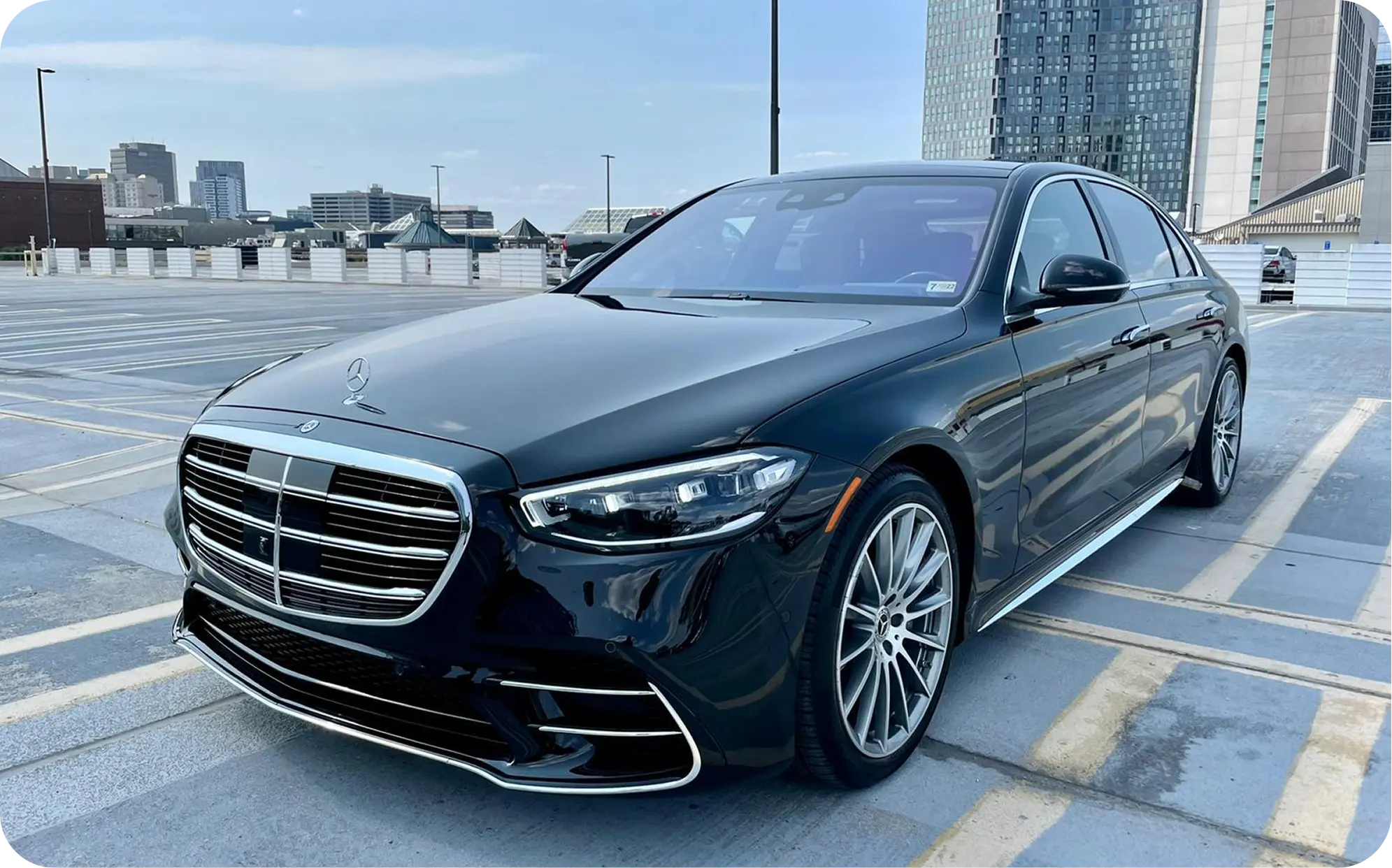
When you book an Uber Black, the app tells you the car will be a premium sedan or SUV with black leather interior. It does not tell you which model you will get. You might get a Lincoln Aviator. You might get a Chrysler 300. The vehicle must meet Uber’s minimum requirements, but the specific car varies by whoever accepts the ride.
When you book a traditional car service, you choose the vehicle category. A sedan. An SUV. A Sprinter van. The company confirms the exact vehicle assigned to your trip. If you need a vehicle that seats six passengers with luggage for a family of five, you know exactly what is pulling up.
The interior condition also varies. An Uber Black driver is an independent contractor responsible for maintaining their own vehicle. Some are meticulous. Some are not. There is no company vehicle manager inspecting the car before your trip. A car service company inspects its fleet and holds its drivers to a presentation standard because the vehicle reflects the business.
Driver Accountability
An Uber Black driver is one of over 100,000 TLC-licensed drivers in New York City. If something goes wrong, your recourse is through the app. You can rate the driver. You can submit a complaint. Uber investigates through its own process. You do not speak to anyone at a company who employs that driver, because Uber does not employ that driver.
A traditional car service driver works for a company with a phone number, a dispatch office, and a name behind the business. If something goes wrong, you call the company. They know which driver was assigned to your trip. They respond directly because their reputation depends on every single ride.
For a one-time airport transfer, this distinction might not matter. For a business traveler who uses the same car service twice a week, or a family that books the same driver for every airport trip, the accountability structure behind the ride is the entire relationship.
Insurance Coverage
Every TLC-licensed vehicle in New York carries commercial auto insurance. That applies to both Uber Black vehicles and traditional car service vehicles. The minimum bodily injury coverage is $100,000 per person and $300,000 per accident, with no-fault coverage of $200,000.
The difference is how the insurance is structured. Uber provides commercial coverage through its platform insurance while the driver is on a trip. Between trips, the coverage drops to the driver’s personal commercial policy. A traditional car service maintains continuous commercial coverage through the base, regardless of whether the driver is on a trip or between trips.
For vehicles carrying 8 or more passengers, insurance minimums sit at $1.5 million per occurrence. That applies to SUVs and vans in the traditional car service fleet.
When Uber Black Makes More Sense
Uber Black is an on-demand product. Its strength is availability without advance planning. If you land at JFK and decide at baggage claim that you want a nicer ride than UberX, Uber Black is three taps away. No reservation needed. No deposit. No commitment until the driver accepts.
For a spontaneous upgrade on a routine trip, or a situation where your plans changed last minute and you need a car in the next ten minutes, Uber Black delivers a vehicle faster than any reservation-based service can respond. The trade-off is the price uncertainty and the variable experience.
If you are traveling solo, your flight is on time, you land during off-peak hours, and you do not need anyone waiting for you, Uber Black is a reasonable option. The app shows you the price. You accept or you do not.
When a Pre-Booked Car Service Makes More Sense
A pre-booked car service is a planned product. Its strength is certainty. The fare is locked. The driver is assigned. The vehicle is confirmed. The flight is tracked. The pickup location is specific. Everything about the ride is resolved before you board your flight.
For business travelers with a client in the car, families arriving on an international flight with children, executives who bill the ride to a corporate account, anyone arriving late at night, or travelers headed to Long Island where rideshare availability is thin, a pre-booked car service removes every variable that Uber Black leaves open.
The difference is sharpest after 10 p.m. Uber Black driver availability drops at JFK late at night. Surge pricing climbs. Wait times stretch. The gap between what the app promises and what actually shows up gets wider. A pre-booked car service operates on a schedule, not on demand, so the driver is already at the terminal regardless of how many other people are requesting rides at the same time.
The Corporate Travel Factor
Companies booking JFK transportation for employees or clients almost always use pre-booked car services. The reasons are practical.
A car service provides a single invoice with pickup time, drop-off time, route, and flat rate. The company knows the cost before it is incurred. The receipt is clean for expense reporting. If the company has an NDA requirement, the car service can accommodate it. If the company needs the same driver for a week of meetings, the service assigns one.
Uber Black provides individual receipts per ride. The cost is unknown until the ride ends. There is no account manager. There is no way to request a specific driver. There is no corporate billing relationship. For a one-off ride, this works. For a Fortune 500 company managing ground transportation for twenty executives across three airports, it does not.
What About Uber Reserve?
Uber Reserve lets you book an Uber Black in advance, up to 90 days ahead. The app provides an upfront price at the time of booking. This is Uber’s answer to the advance-booking advantage of traditional car services.
It closes some of the gap. You know the price in advance. The driver is assigned before your pickup time. But the experience still runs through the app, not through a dispatcher. Flight tracking is limited compared to a dedicated car service. The driver is still an independent contractor who accepted a scheduled ride, not a company employee assigned to your trip. And if the assigned driver cancels, which does happen, the app rematches you to the next available driver at the original price, but the wait starts over.
The Side-by-Side Breakdown for JFK to Midtown Manhattan
Here is what each option looks like for the same route.
Uber Black: $85 to $120 base fare, plus $3.50 JFK surcharge, plus approximately $9.50 tunnel toll, plus $9 congestion surcharge, plus tip. With surge pricing during peak hours, the all-in total can run $130 to $250 or more. You request after landing. Wait 3 to 10 minutes for the driver to reach your terminal. You find the car in the pickup zone.
Pre-booked car service: $80 to $140 flat, all-inclusive. Tolls, surcharges, and gratuity are included or clearly stated at booking. Your driver is already at the terminal when you walk out. Flight tracked. Luggage loaded. Direct route, no other stops.
The price ranges overlap. On a quiet Tuesday afternoon, Uber Black might cost less. On a Friday evening, the car service almost certainly costs less. The consistency is the difference. With the car service, you know the total every time.
How to Decide: Three Questions
Before you book either one, answer three questions.
Do you know when you are arriving? If yes, a pre-booked car service lets you lock in the price and have a driver waiting. If your plans are fluid and you might not know until you land, Uber Black’s on-demand model fits better.
Does someone need to be there when you walk out? If you are traveling with family, arriving late at night, or have a client with you, the meet-and-greet with a driver who has been tracking your flight is worth the booking. If you are a solo traveler who does not mind walking to the pickup zone and waiting a few minutes, the app works.
Is the fare predictable enough for your situation? If you are traveling during off-peak hours and surge pricing is unlikely, Uber Black gives you a fair price. If you are arriving during a peak window and cannot afford a surprise on the receipt, the flat-rate car service removes the risk entirely.
Both are legitimate. Both use TLC-licensed vehicles and drivers. The question is not which one is safer. The question is which one matches the kind of trip you are taking.
Frequently Asked Questions
Is Uber Black the same as a black car service?
No. Uber Black is a premium tier within the Uber app that matches you with independent contractor drivers who meet certain vehicle and rating requirements. A traditional black car service is a TLC-licensed base that dispatches its own affiliated drivers and vehicles on a pre-arranged basis. Both use TLC-licensed vehicles in New York City, but the booking model, pricing structure, and service experience are different.
How much does Uber Black cost from JFK to Manhattan?
The base fare for Uber Black from JFK to Midtown Manhattan typically runs $85 to $120 before additional charges. With the JFK airport surcharge ($3.50 as of 2026), tunnel toll (approximately $9.50), congestion surcharge ($9), and tip, the all-in cost is usually $130 to $160 without surge pricing. During peak hours, surge multipliers of 1.5 to 2.5 times can push the total past $200.
Can an Uber Black driver cancel my ride at JFK?
Yes. Uber Black drivers are independent contractors and can cancel accepted rides. At airports, where drivers may wait in a queue for up to an hour, some drivers cancel rides they consider too short or request that passengers cancel instead. If the passenger cancels after the driver has been assigned, the cancellation fee is $10 for premium tiers. A pre-booked car service assigns a driver who cannot cancel your trip.
Does Uber Black track my flight at JFK?
Uber does not track flights the way a traditional car service does because you typically request the ride after landing. Uber Reserve, which allows advance booking, offers limited flight tracking, but the system is not as integrated as a dedicated car service that monitors your flight in real time and automatically adjusts the driver’s arrival based on delays or early arrivals.
What is the difference between Uber Black and Uber Black SUV?
Uber Black uses premium sedans with black exterior and black leather interior, seating up to 3 passengers. Uber Black SUV uses larger vehicles like the Cadillac Escalade or Lincoln Navigator, seating up to 6 passengers with more luggage capacity. Uber Black SUV costs approximately 30 to 40 percent more than Uber Black for the same route. Both require the driver to maintain a 4.85 or higher rating.