Rachel Mendes landed at Terminal 4 around 11 p.m., dragging a suitcase and a carry-on after nine hours from London. Before she even reached the arrivals hall, a man in a black jacket stepped in front of her. “Need a ride? I got a car right outside.” He reached for her bag.
Rachel pulled it back.
That instinct probably saved her a few hundred dollars. Because the guy with the car right outside was not a taxi driver. He had no TLC license, no commercial insurance, no meter, and no accountability. Just a sedan in a parking garage and a price he would decide once she was already inside.
This happens at JFK every single night. In 2025 alone, Port Authority officers issued over 2,400 summonses for illegal ride solicitation at JFK. That was nearly double the year before. One couple paid $800 for a ride from JFK to Times Square. A TikToker described being locked in a fake taxi and forced to withdraw cash before law enforcement intervened.
The Port Authority and New York City are now spending $100 million over the next decade on Operation Legal Ride, deploying AI-powered surveillance, license plate readers, and plainclothes officers inside terminals to shut these operations down. Port Authority Chairman Kevin O’Toole put it plainly: “These hustlers need to be put out of business.”
But enforcement is one layer. Knowing your options before you land is the other. Here is every legitimate way to get from JFK to your hotel, what each one actually costs, and which one keeps you safest depending on when you arrive, how much luggage you have, and where you are going.
How the JFK Taxi Scam Works
It starts in the arrivals hall. You are tired. You are carrying bags. Someone approaches you and offers a ride. They might be wearing a lanyard or a vest. They might say “taxi” or “car service.” They are none of those things.
These unlicensed drivers are what the Port Authority calls “hustlers.” They operate without a New York City Taxi and Limousine Commission (TLC) license, without commercial insurance, and without any of the safety inspections that legal vehicles go through three times a year.
Once you are in the car, the driver names a price. It might be $150 to Midtown. It might be $300 to Brooklyn. It might be $800 to Times Square. You have no meter, no app, no record of the trip, and no recourse.
Jason Kersten, a spokesperson for the NYC Taxi and Limousine Commission, explained it this way: “Any individual offering a ride without being prearranged or hailed is engaging in an illegal activity.”
The tell is the approach. A licensed yellow cab never solicits you inside the terminal. A pre-booked car service texts you the driver’s name, car make, and plate number before you land. If someone walks up to you inside the building and offers a ride, that is your signal to keep walking.
Yellow Taxi from JFK: The Flat Rate to Manhattan
The official taxi stand is outside every JFK terminal, managed by uniformed dispatchers. You wait in line. A dispatcher assigns you the next available yellow cab. This is the system.
The base flat rate from JFK to any destination in Manhattan is $70. That has been the standard for years. But $70 is not what you actually pay. By the time you add the $2.50 congestion surcharge, the $0.50 MTA surcharge, the $1.00 improvement surcharge, and a 15 to 20 percent tip, the real total is closer to $90 to $100. If you travel during the weekday rush between 4 and 8 p.m., add another $5.00 surcharge. And tolls through the Midtown Tunnel or Queens-Midtown Expressway are extra.
The flat rate only applies to Manhattan. If your hotel is in Brooklyn, Queens, the Bronx, or anywhere on Long Island, the cab runs on a meter. That meter can produce very different totals depending on traffic and route.
Yellow cabs are TLC-licensed. They carry commercial insurance. They have functioning meters. They are inspected. For a ride to Manhattan, they are a legitimate and reasonably safe option. For anything outside Manhattan, the metered fare introduces uncertainty.
Uber and Lyft from JFK: Convenient but Unpredictable
Every JFK terminal has a designated rideshare pickup area on the arrivals level. You request through the app, walk to the pickup spot, and match the plate number on your screen to the car that pulls up.
Base fares from JFK to Manhattan typically run $43 to $59 for UberX, and similar for Lyft. That is before the airport adds its per-pickup surcharge of $3.50, effective March 2026, which rises to $4.50 in March 2027 and $5.00 in March 2028. Tolls and tips are additional.
The problem is surge pricing. During peak evening arrivals, roughly 5:30 to 9:30 p.m., surge multipliers can push fares past 1.8 times the base rate. A $50 ride becomes $90 or more. Sunday afternoons tend to be the worst. The lowest fares hit during late morning and early afternoon on Tuesdays through Thursdays.
There is also the wait. Terminal 4 during an evening international arrival bank can mean a 3 to 7 minute wait for your driver to reach the pickup area. At Terminal 5, pickups tend to be fastest. At Terminal 8 for international arrivals, there is a dedicated rideshare lot.
Rideshare is safe in the sense that the app records your driver, vehicle, and route. You have a digital receipt. You can share your trip with someone. The trade-off is the fare unpredictability, especially on a late international arrival when surge pricing tends to spike.
AirTrain Plus Subway: Cheapest but Not for Everyone
The AirTrain connects all JFK terminals to two stations. One links to the subway at Howard Beach on the A line. The other links to the Long Island Rail Road at Jamaica Station.
The AirTrain fare is $8.75 as of 2026. A subway ride adds $3.00. So the total to get from JFK to Manhattan by AirTrain and subway runs about $11.75. If you take the LIRR from Jamaica to Penn Station instead, the AirTrain plus LIRR total is $14 to $16 depending on peak or off-peak.
For budget travelers with light luggage during daylight hours, this works. The subway takes roughly 60 to 75 minutes depending on your Manhattan destination. The LIRR route cuts that to about 45 minutes.
The concern is practical, not dramatic. At 11 p.m. with two suitcases, navigating the AirTrain, transferring to a subway platform, and riding the A train through Queens and into Manhattan is uncomfortable. There are stairs. There are gaps between platforms. The trains are less frequent late at night. And you are visibly a traveler carrying your belongings through the system.
This is not about fear. The subway is used by millions of people safely every day. But for a first-time visitor landing late with luggage, the AirTrain-subway combination asks a lot.
Shared Shuttle Vans: Low Cost, Long Ride
Shared shuttle services like GO Airlink run from JFK to Manhattan hotels for roughly $20 to $30 per person. You share the van with other passengers headed to different hotels.
The trade-off is time. The van does not leave until it fills, and it makes multiple stops. A ride that should take 45 minutes to your hotel can stretch past 90 minutes because you are the fourth drop-off. If you land at midnight, you may wait 20 to 30 minutes before the van departs.
For solo travelers on a budget who land during normal hours and have patience, shuttles work. For families with children, travelers with heavy luggage, or anyone arriving late, the time cost usually outweighs the savings.
Pre-Booked Car Service: What Changes When Someone Is Already Waiting
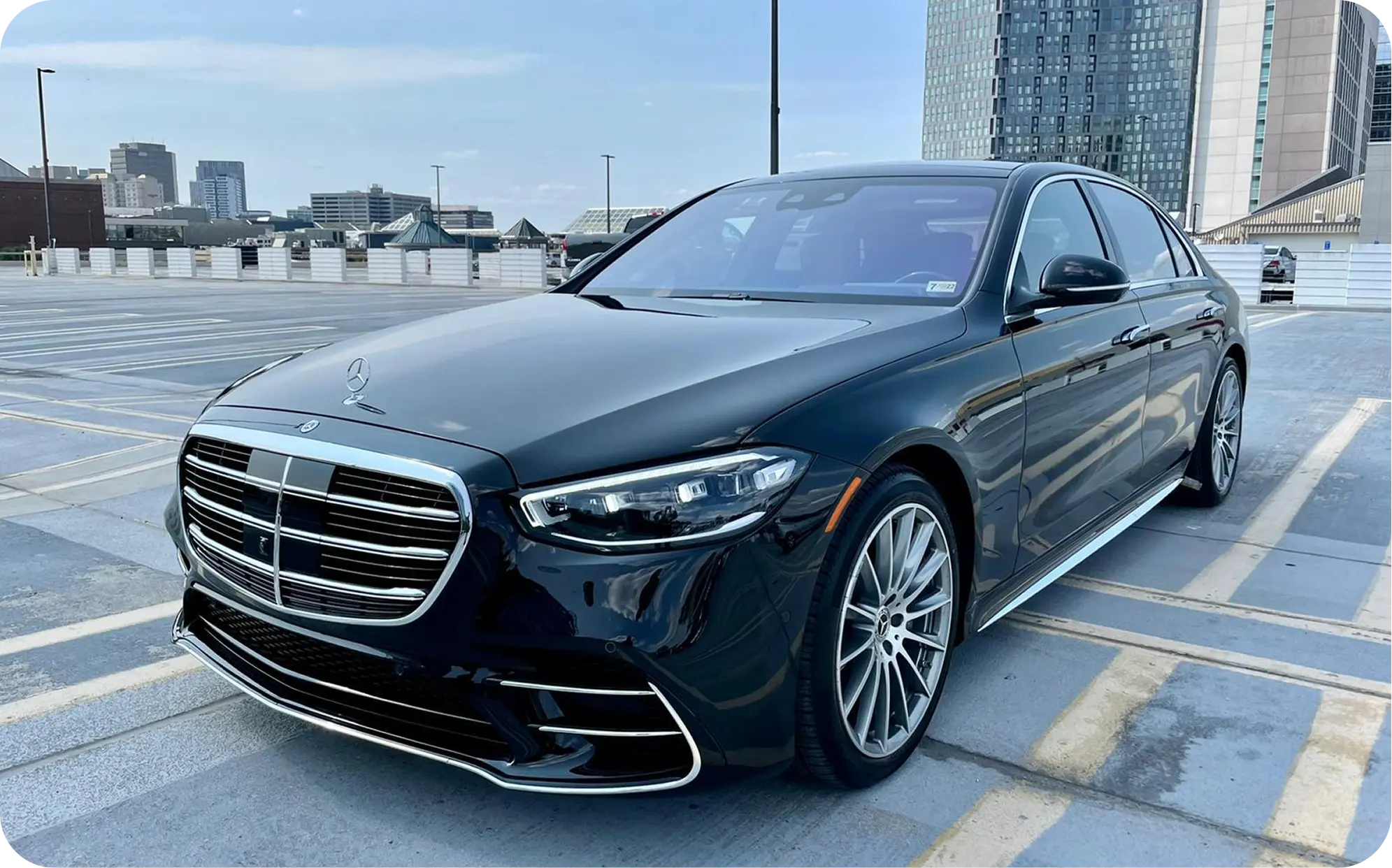
Here is what a pre-booked car service from JFK looks like from the passenger side.
Before you land, you get a text with your driver’s name, phone number, car make, model, and plate number. Your driver monitors your flight in real time. If your plane is delayed 45 minutes, the driver adjusts. You do not pay for that wait.
When you walk out of the terminal, the car is already there. Your driver loads your bags. The route is direct to your hotel, no other stops. The fare was locked when you booked. It does not move because of traffic, time of day, or weather. No surge pricing. No meter. No surprises.
Every vehicle operated by a TLC-licensed car service in New York goes through three mandatory safety inspections per year at TLC facilities in Woodside, Queens. Drivers hold active TLC licenses, which require a 24-hour classroom course, an annual drug test, a background check, and a DMV record review. Vehicles with 9 or more passengers require a CDL Class C with a Passenger endorsement. For vehicles carrying 8 or more passengers, insurance minimums sit at $1.5 million per occurrence.
That is the regulatory infrastructure behind a licensed car service. An unlicensed driver at the terminal has none of it.
What About Hotel Shuttles?
A handful of airport-adjacent hotels near JFK offer free shuttle service. The Hampton Inn JFK, for example, runs a 24-hour shuttle between the hotel and the airport. These are legitimate and safe for guests staying at those specific hotels.
But most Manhattan hotels do not run JFK shuttles. If your hotel is in Midtown, the Financial District, Times Square, or anywhere in Manhattan proper, a hotel shuttle is almost certainly not an option.
Landing Late at Night: Why Your Transportation Choice Matters More After 10 p.m.
The gap between a good option and a bad one widens after dark.
Yellow cab dispatchers still work the taxi stands late at night, but the lines can be shorter or nonexistent, which also means fewer witnesses and less structure around the process. Rideshare availability drops and surge pricing tends to climb as fewer drivers are on the road.
The AirTrain runs until midnight, but the connecting subway service becomes infrequent. Waiting 15 to 20 minutes on a platform at Howard Beach with luggage at 12:30 a.m. is a very different experience than doing the same thing at 2 p.m.
This is where a pre-booked car service earns its value. The driver is already positioned at the terminal before you clear customs. Flight tracking means your delay is their delay, not a missed connection. The ride starts the moment you step outside.
For business travelers with early-morning meetings, families with children asleep in the stroller, or anyone arriving on a red-eye, the certainty of a car that is already there changes the entire arrival experience.
First Time at JFK? Here Is What to Do When You Walk Out of the Terminal
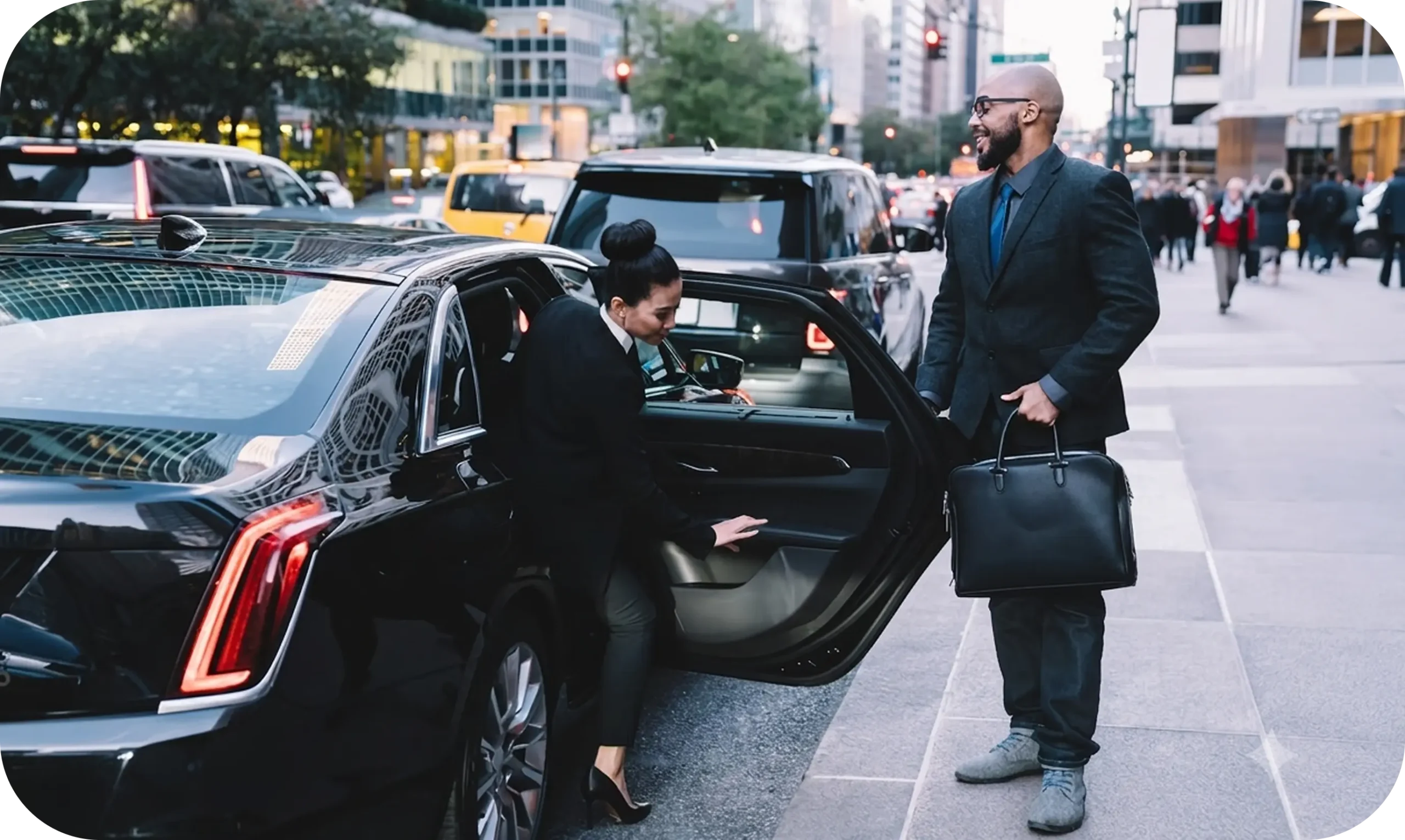
Follow the signs. Every terminal at JFK has clearly marked ground transportation signage that directs you to the official taxi stand, the rideshare pickup zones, the AirTrain station, and the shuttle areas.
Do not follow a person. Follow the signs.
If you booked a car service, your confirmation will tell you exactly where to meet your driver. Most car service pickups at JFK happen in designated areas on the arrivals level. Your driver will text or call when positioned.
If you are unsure, the Port Authority operates Welcome Centers in the arrivals sections of JFK terminals. Staff can point you to legitimate transportation and help you avoid unlicensed operators.
How to Verify That Your Ride Is Legal
There are three things to check before you get into any vehicle at JFK.
A licensed yellow cab has a four-digit medallion number on the roof light and sides. A green borough cab displays a specific license number. Both have functioning meters. If any of these are missing, it is not a licensed taxi.
A rideshare vehicle should match the make, model, color, and plate number shown in your app. The driver’s photo should match the person behind the wheel. If anything does not match, cancel the ride and request a new one.
A pre-booked car service will provide the vehicle and driver details before you land. The car will display a TLC license plate. The driver will confirm your name when you approach. You should never have to guess whether you are in the right car.
What About Getting from JFK to Long Island?
Most JFK transportation guides focus on Manhattan because that is where the volume is. But a significant number of travelers landing at JFK are headed to Long Island, whether home, to a hotel on the Island, or visiting family in Nassau or Suffolk County.
There is no flat-rate taxi to Long Island. Yellow cabs run on a meter, and from JFK to central Long Island, that meter can run well past $100 before tip and tolls. Rideshare fares to Long Island are similarly unpredictable and surge-prone.
The LIRR from Jamaica Station reaches parts of Nassau and western Suffolk, but it requires the AirTrain transfer, and service drops significantly after midnight. And you still need to get from the LIRR station to your actual destination.
A car service from JFK to Long Island with flat-rate pricing removes all of that. You know the total before you book. The driver meets you at the terminal. The ride goes door-to-door, not station-to-station.
The Real Cost Comparison: Every Option Side by Side
Here is what each option actually costs for a ride from JFK to a Midtown Manhattan hotel, with all fees included.
AirTrain plus subway runs about $11.75 total. Travel time is 60 to 75 minutes with transfers. No luggage assistance.
A shared shuttle runs $20 to $30 per person but can take 90 minutes or more with multiple stops. Limited availability late at night.
Yellow taxi flat rate is $70 base, but $90 to $115 all-in with surcharges, tolls, and tip. Direct route, 40 to 70 minutes depending on traffic.
Uber or Lyft runs $43 to $59 base, plus the $3.50 JFK surcharge, tolls, and tip. With surge pricing during peak hours, the total can exceed $100. Travel time is 40 to 70 minutes.
A pre-booked car service runs $80 to $140 flat to Manhattan, all-inclusive. Direct route, 40 to 70 minutes. Flight tracking, meet-and-greet, luggage assistance, and no surge pricing.
The cheapest option is the AirTrain. The most predictable option is the pre-booked car service. The biggest variable across every option is time of day.
Why Safety at JFK Is Not Just About the Ride
Safety is not only about whether you get into a licensed vehicle. It is about the full chain of decisions from the moment you clear customs to the moment you walk into your hotel.
Do you have a plan, or are you making decisions while exhausted in a crowded arrivals hall? Do you know exactly where to go, or are you scanning the terminal hoping someone points you the right way? Do you know your fare in advance, or are you hoping the number that appears on the meter or the app is reasonable?
The safest arrival is the one where every variable is resolved before you land. Your driver is tracked to your flight. Your fare is locked. Your pickup location is confirmed. You walk out, find your car, and go.
That is not a luxury. That is a plan.
Frequently Asked Questions
Is it safe to take a taxi from JFK at night?
Licensed yellow cabs from the official taxi stand are safe at any hour. The dispatchers are uniformed Port Authority staff, and the cabs are TLC-licensed with commercial insurance. The risk at night comes from accepting rides from unlicensed individuals who approach you inside the terminal. Always use the designated taxi stand and never accept a solicited ride.
How do I avoid taxi scams at JFK airport?
Follow the ground transportation signs to the official taxi stand. Do not accept rides from anyone who approaches you inside the terminal. Licensed yellow cabs have four-digit medallion numbers on the roof and sides. If you are using a rideshare app, verify the car’s make, model, and plate number before getting in. If you pre-booked a car service, your driver’s details will be sent before you land.
What is the safest transportation from JFK to Manhattan?
Any TLC-licensed option is safe: yellow taxis from the official stand, app-based rideshares where you can verify driver details, and pre-booked car services with flight tracking and confirmed driver information. The safest choice depends on your arrival time, luggage volume, and comfort level. Pre-booked car services offer the most certainty because the fare, driver, and vehicle are all confirmed before you land.
Is the AirTrain from JFK safe?
The AirTrain itself is a Port Authority-operated system used by millions of passengers annually. During daytime hours, it is a practical and safe way to connect to the subway or LIRR. Late at night, the concern is more about comfort and logistics than safety. Navigating transfers with heavy luggage on less frequent trains after midnight is tiring, especially for first-time visitors.
How much should I pay for a car from JFK to my hotel?
For Manhattan, expect $90 to $115 in a yellow cab (flat rate plus surcharges, tolls, and tip), $55 to $100+ for Uber or Lyft depending on surge pricing, or $80 to $140 for a pre-booked car service with flat-rate pricing. For Long Island destinations, metered taxis can exceed $100, while flat-rate car services provide a locked price before you book.